Safeguarding
Information
Safeguarding
Information Arbor
Arbor
Personal, Social, Health and Citizenship Education & SMSC at Bingley Grammar School
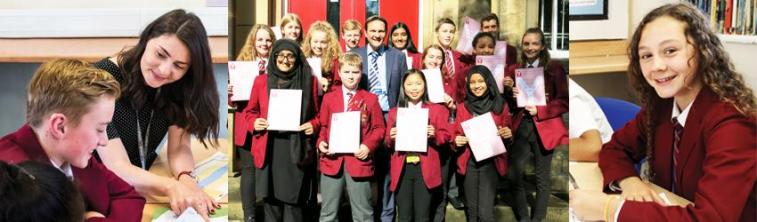
At Bingley Grammar School, our PSHCE (Personal, Social, Health and Citizenship Education) and SMSC (Spiritual, Moral, Social and Cultural) curriculum empowers students to lead confident, healthy, and responsible lives. Through our dedicated provision, we support students as they navigate adolescence and prepare to take their place as thoughtful, active members of our school, local, national, and global communities.
Our PSHCE and SMSC provision is explicitly guided by our core school values and our overarching mission: "Working together to be the best that we can be."
Guided by Our Core Values
- Respect: Fostering mutual respect, a genuine appreciation for diversity, self-respect, and consideration for others across all aspects of school and community life.
- Commitment: Encouraging dedication to personal growth, academic learning, resilience when facing challenges, and taking active responsibility for future career pathways.
- Collaboration: Promoting strong partnerships between staff, students, parents, and the wider community to build a shared sense of belonging and mutual support.
In line with statutory national guidance, we actively promote fundamental British values—democracy, the rule of law, individual liberty, and mutual respect and tolerance for those with different faiths and beliefs. These values, alongside our school values, shape the character of our students and help us create a safe, caring, and inclusive environment where every member of our community is valued.
How Our Curriculum is Structured
Our age-appropriate, broad curriculum adapts to the changing needs of our students across all Key Stages:
- Key Stage 3 (Years 7–8, with Year 9 as a bridge): Focuses on embedding the core LORIC skills (Leadership, Organisation, Resilience, Initiative, and Communication). This grounds students in a culture of Respect, Commitment, and Collaboration, supporting both their academic progress and personal development.
- Key Stage 4 (Years 10–11): Aligned with the national PSHE Association framework. Students cover three key pillars: Health & Wellbeing, Relationships, and Living in the Wider World, building resilience and preparing for post-16 pathways.
- Key Stage 5 (Years 12–13): A specialized programme of study and support managed under Sixth Form leadership.
How PSHCE is Delivered
We ensure a rich and varied learning experience through multiple delivery methods across the academic year:
- Bi-Weekly Lessons: A dedicated 60-minute lesson every other week.
- Tutor Periods: A 30-minute session every other week (KS3 LORIC / KS4 PSHCE).
- Drop Down Days: Specialized days dedicated to deep-dive topics throughout the year.
- Assemblies & Theme Weeks: Regular whole-school assemblies and focused theme weeks (such as Anti-Bullying, Mental Health, and British Values).
Safe, Inclusive, and Supportive Learning
We are committed to providing a safe environment where students can reflect on personal attitudes and engage in respectful discussions.
- Ground Rules & Respect: Clear classroom ground rules are established to ensure discussions are open, safe, and balanced.
- Inclusion & SEN Support: Our provision meets the needs of all learners and protected characteristics under the Equality Act 2010. We work closely with the Learning Support Faculty to adapt learning and provide targeted pastoral support for vulnerable groups.
- Safeguarding & Student Support: The wellbeing and safety of our students is paramount. Clear procedures are in place so that any sensitive disclosures or concerns are immediately directed to our Designated Safeguarding Lead (DSL) team in line with statutory child protection pathways.
For further information regarding our curriculum or policies, please feel free to contact the school or review our standalone RSE Policy.
Year 7 reading lessons
Term 1- ‘Boy Underwater’ by Adam Baron. Addresses the narrator’s mother’s mental breakdown and the effect this has on his life. Health, Well Being and Relationships
Term 2- ‘Goldfish boy’ by Lisa Thompson. Addresses what it is like to live with severe OCD. Health, Well Being and Relationships
Term 3- ‘Being Miss Nobody’ by Tasmin Winter. Addresses bullying including online and social media. Health, Well Being and Relationships and Peer to Peer Abuse.
Year 8 reading lessons
Term 1- ‘Welcome to Nowhere’ by Elizabeth Laird. Portrays the life of a boy escaping Syria as a refugee. Health, Well Being and Relationships and British Values and Democracy
Term 2- ‘A Kind of Spark’ by Ellie McNicoll. Portrays the life of a girl with autism and how her condition aids and shapes her life. Health, Well Being and Relationships
Term 3- ‘Ways to Live Forever’ by Sally Nicholls. The teenage narrator dies from leukemia. A story about dealing with grief but also making the most of your life! Health, Well Being and Relationships and My Life; Making choices and personal growth
With this also being supported by books purchased for The Library:
‘The Art of Being Normal’ by Lisa Williamson. Addresses what it is like to be transgender. High ability Year 8 and older only. Health, Well Being and Relationships
‘All About Mia’ by Lisa Williamson. Sibling rivalry and substance abuse. High ability Year 8 and older only. Health, Well Being and Relationships
‘The Night Bus Hero’ by Onjali Rauf. Homelessness and bullying. Health, Well Being and Relationships and Peer to Peer Abuse.
‘The Star Outside my Window’ by Onjali Rauf. Domestic violence. Health, Well Being and Relationships
Therefore overall we feel there is an excellent emphasis placed upon PSHCE and we look forward seeing this grow and develop this year.